

Enterprise AI Roles and Responsibilities
An AI pilot can have an owner. Production AI needs an ownership model.
Once AI moves into real operations, it stops being only a technology project. It begins interacting with business processes, enterprise data, applications, security controls, employees, customers and, increasingly, decisions and actions.
Then a simple question becomes surprisingly difficult: Who is responsible when the AI does something? The business? The team that built it? IT? Security? The data owner? The team operating the process? The answer is usually more than one of them. And that is exactly why ownership needs to be designed before AI becomes part of day-to-day operations.
The NIST AI Risk Management Framework calls for AI related roles, responsibilities and lines of communication to be documented and clear across the organisation. It also places responsibility on executive leadership for decisions associated with AI development and deployment. The practical question therefore is not simply: Who owns AI? It is: Who owns each decision the AI system creates?
Why AI ownership becomes harder after deployment
During a proof of concept, a relatively small team can make most decisions. A data team may build the model. An engineering team may connect the systems. A business sponsor may validate the use case. That can work while the environment is controlled.
Production changes the equation. Now someone needs to decide:
- Whether the AI is achieving the intended business outcome
- Which data it can use
- What systems it can access
- What actions it is allowed to take
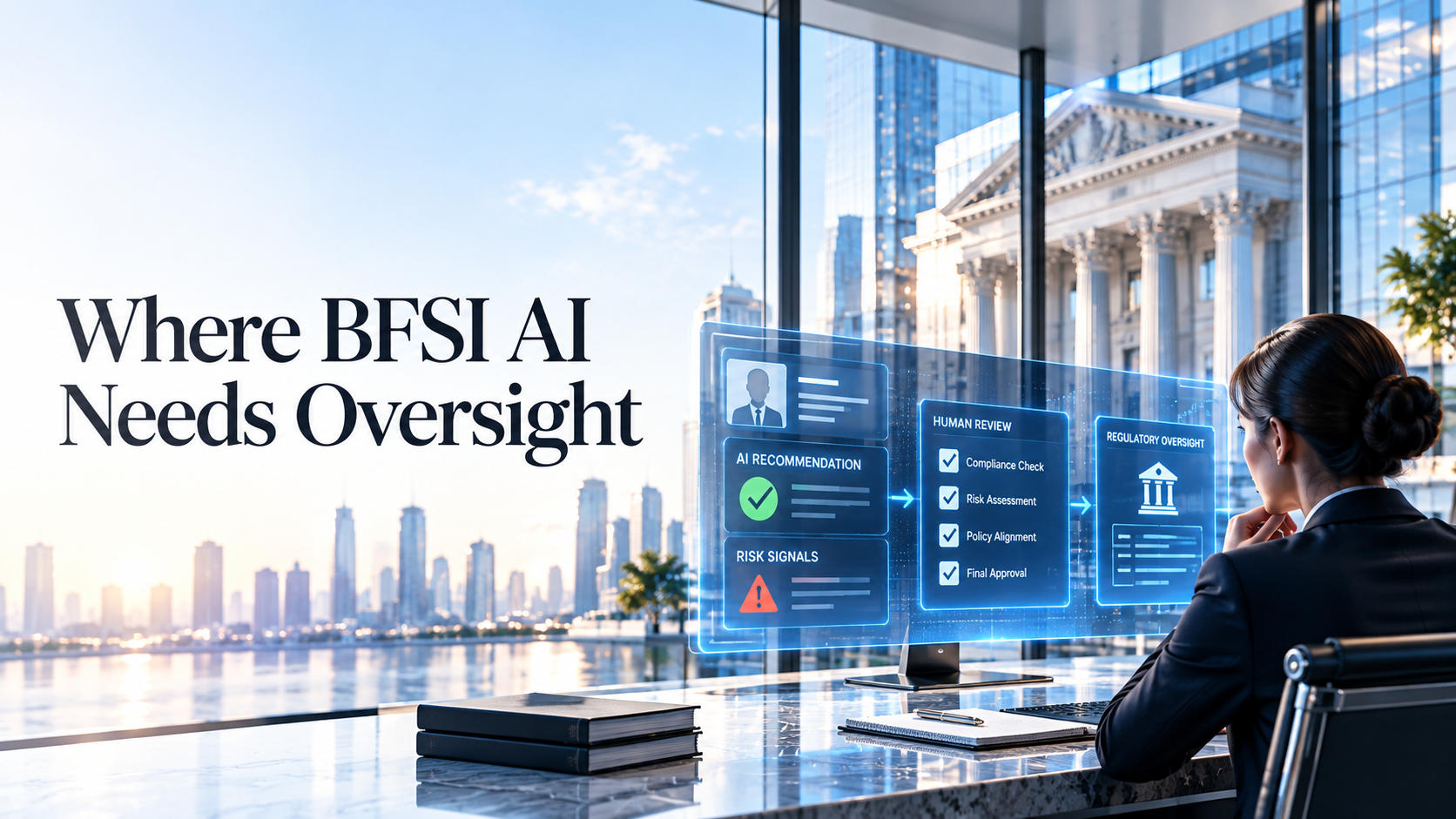
- When human approval is required
- How performance is monitored
- Who responds when something goes wrong
- Who approves changes
- When the system should be modified, restricted or stopped
That is why AI ownership is not a single role problem. It is an operating model problem. IBM is making a similar point in its current enterprise AI work: as AI becomes embedded in business operations, organisations need an operating model connecting AI, data, automation, infrastructure, governance and control rather than treating AI as an isolated technology layer.
The Enterprise AI Ownership Model
A practical starting point is to divide ownership into five layers.
BUSINESS: Business leader / process owner Decision owned: Should the AI be doing this, and is it creating value?
TECHNOLOGY: IT / engineering / AI team Decision owned: Is the system reliable, integrated and technically controlled?
DATA: Data owner / data team Decision owned: Can the AI use this information, and can it trust it?
RISK & SECURITY: Security / risk / legal / compliance Decision owned: What is the AI allowed to do?
OPERATIONS: Process / operational owner Decision owned: What happens when the AI is running every day?
Leadership and governance sit across all five, ensuring responsibilities connect and ownership gaps do not appear between teams. The exact structure will differ from organisation to organisation. The important thing is that every significant decision has a clear owner.
1. Business ownership: who owns the outcome?
The business should own the reason the AI exists. That means defining:
- What problem is being solved
- What success looks like
- Which decisions AI may influence
- What level of error is acceptable
- When human judgement must take over
- When the system is no longer creating enough value to justify its use
This distinction matters because a technically successful AI system can still fail commercially. A model can perform exactly as designed while improving a metric the business does not value or automating a process that should not have been automated in the first place.
The business owner therefore answers one fundamental question: Is this AI producing the outcome we actually intended?
2. Technical ownership: who owns the system?
Technology teams generally own the environment that makes AI work. That can include:
- Model and application architecture
- APIs and system integrations
- Cloud and infrastructure
- Performance and latency
- Reliability
- Observability
- Version changes
- Technical incidents
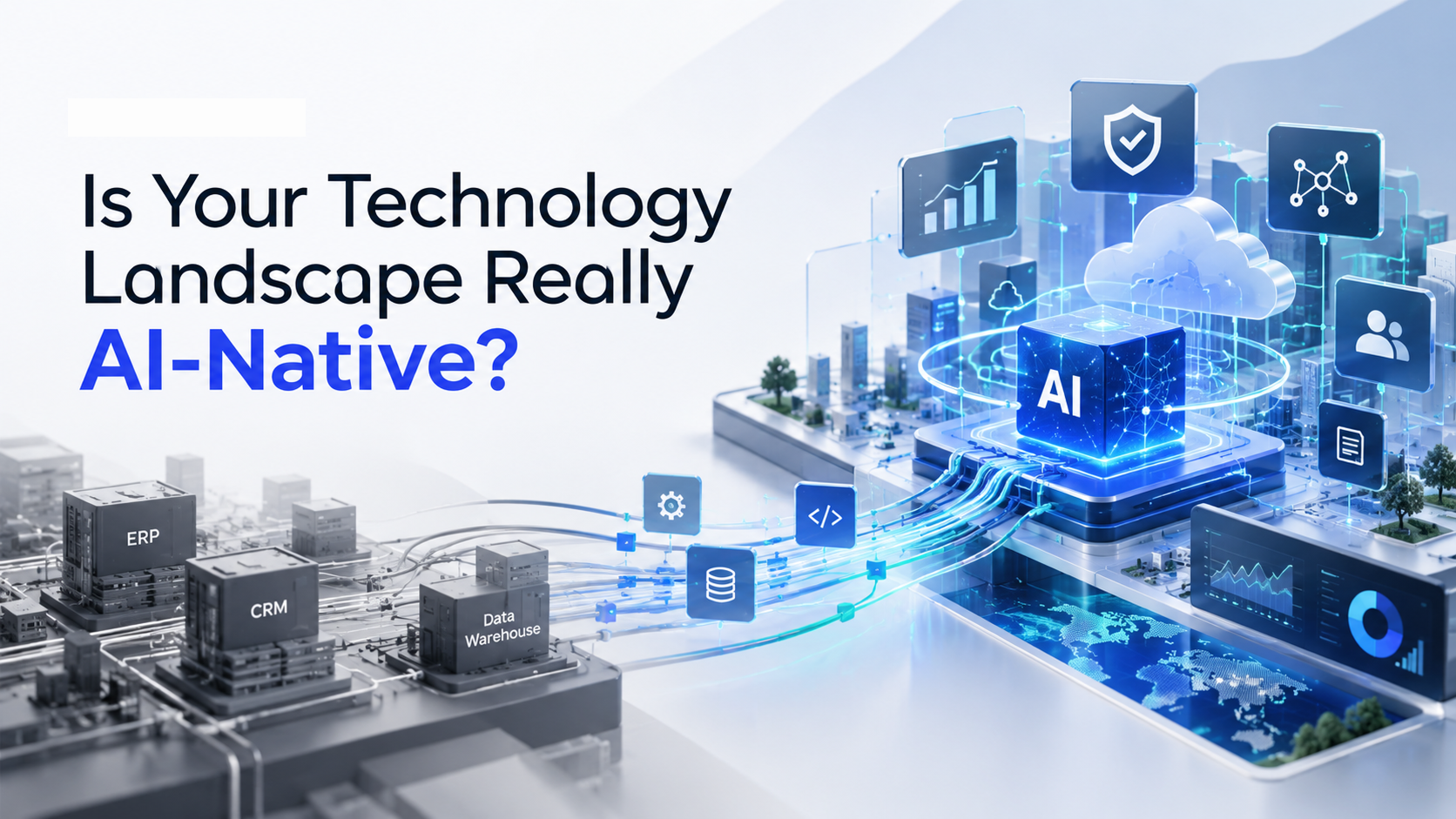
This becomes increasingly important when AI moves beyond a standalone assistant and begins interacting with ERP systems, CRM platforms, workflow tools, internal knowledge bases or customer facing applications. At that point, AI is no longer simply a model. It is part of the enterprise architecture. And its reliability depends on much more than the model itself.
3. Data ownership: who decides what the AI can trust?
AI cannot be separated from the data it depends on. Someone needs authority to determine:
- Whether the data is accurate enough
- Where it came from
- Who can access it
- Whether sensitive information is involved
- Whether it is appropriate for the intended use
- How long it should be retained
- Whether key business definitions are consistent
An AI system connected to unreliable or poorly governed information can produce confident outputs built on weak foundations. Data ownership therefore cannot mean simply supplying information to the AI team. The data owner needs authority over what information the AI is allowed to use and under what conditions.
4. Risk and security ownership: who defines the boundaries?
As AI becomes more connected and capable, the question changes from: What can the AI do? to: What should it be allowed to do?
Security, risk, compliance and legal teams may need to establish boundaries around:
- data access
- user identity
- permissions
- external AI providers
- automated actions
- human approvals
- regulatory requirements
- monitoring
- auditability
- incident response
The goal is not to make every AI decision pass through a committee. It is to ensure that important risk decisions have a clear owner before the system reaches production.
5. Operational ownership: who runs AI after go live?
This is one of the easiest responsibilities to overlook. Someone has to live with the AI after the implementation team moves on.
Who reviews exceptions? Who responds when output quality deteriorates? Who handles user complaints? Who investigates abnormal behaviour? Who decides whether escalation is required? Who coordinates a fix when the problem crosses business, data and technology teams?
NIST treats operation and monitoring as distinct responsibilities across the AI lifecycle, alongside design, development and deployment. This is where a pilot-style operating model can begin to break. The organisation has designed the system. But it has not designed the organisation around the system.
Ownership should increase with AI autonomy and consequence
Not every AI system requires the same ownership structure. Consider four levels: AI informs → AI recommends → AI acts → AI makes or influences consequential decisions
An internal knowledge assistant retrieving company policies does not carry the same operational consequence as an AI system that can modify customer records, approve a workflow or trigger a financial transaction. As autonomy and consequence increase, several things should become more explicit:
Permissions ↑
Monitoring ↑
Human oversight ↑
Risk ownership ↑
Change control ↑
The principle is simple: The more authority an AI system receives, the clearer its ownership model needs to become.
One role organisations can easily miss: who owns change?
Deployment is not the end of an AI system's lifecycle. The environment around it keeps changing.
Models are updated. Data changes. Business rules evolve. APIs change. Prompts are modified. Policies shift. New users gain access. New systems are connected. Someone therefore needs authority over change management.
That includes deciding:
- What can be changed
- Who can approve a change
- Whether testing is required
- What needs to be revalidated
- Whether business owners need to sign off
- Whether security or compliance needs to review the change
- How production changes will be monitored
This is becoming an important enterprise issue. In a 2026 IBM Institute for Business Value study involving 2,000 technology executives, two thirds of surveyed CIOs and CTOs said they were accountable for AI systems they did not fully control. IBM also reported that 70% said business teams were deploying technology faster than IT could track.
That creates a dangerous gap: Accountability without visibility is not an operating model. Production risk does not appear only on launch day. It can emerge months later because the AI or the enterprise around it has changed.
Ownership and execution are different decisions
Once accountability is clear, the organisation still needs to decide how the required capability will be delivered. Some capabilities may need to remain inside the enterprise because they are strategic, recurring or closely connected to business operations. Others may require temporary specialist expertise or additional engineering capacity. A useful distinction is:
Accountability determines who remains responsible for the AI system and its outcomes. Execution determines who performs the technical work required to build, integrate, operate or improve it. These do not always need to sit with the same team.
For example:
- An internal team may own the architecture while specialist engineers support implementation
- A business function may own the outcome while technology teams operate the system
- External expertise may support a defined technical initiative while governance and approval remain internal
Accountability can remain inside the enterprise even when some execution capability does not.
A practical enterprise AI ownership checklist
Before moving an AI system into production, leadership should be able to answer the following questions.
Business
- Who owns the business outcome?
- How will success be measured?
- Who can restrict or stop the system if it stops delivering value?
Technology
- Who owns the architecture, integrations and reliability?
- Who approves technical changes?
- Who responds to system failures?
Data
- Who owns the information being used?
- Who decides whether that data is suitable?
- Who controls access?
Risk and security
- Who defines what the AI may and may not do?
- Which actions require approval?
- Who handles security, regulatory or compliance incidents?
Operations
- Who monitors the system after deployment?
- Who handles exceptions?
- Who owns escalation?
Change
- Who approves changes to the AI or its surrounding environment?
- What needs to be retested or revalidated?
- Who determines whether a production change is safe?
Delivery
- Which capabilities must remain internal?
- Where does the existing team need specialist expertise?
- Which defined technology outcomes could be delivered with an external partner?
If those answers are unclear, the organisation may have an AI system ready for production without having an operating model ready for it.
The real question is not “Who owns AI?”
There may never be one correct owner. And there does not need to be. The better objective is to make ownership explicit across the AI lifecycle.
The business owns value. Technology owns the system. Data owners protect the information foundation. Security and risk teams define the boundaries. Operations owns continuity. Leadership makes sure those responsibilities connect rather than overlap or disappear between functions.
Because once AI becomes part of real enterprise operations, unclear ownership becomes an operational risk of its own. The question is not simply “Who owns AI?” It is “Who owns each decision the AI system creates?”